Sectors & Industries
What subject matter, terminology, regulation, or domain knowledge shapes the work?

E-commerce localization isn’t about choosing “AI vs human” up front — it’s about choosing a launch path that fits your budget and timeframe, then iterating based on what users actually do. In some cases it makes sense to segment early and launch with a mix (MT for low-impact scale content, hybrid for mid-impact, and human for conversion-critical surfaces like key landing pages, product pages, and checkout). In other cases, the fastest route is to launch with a lightweight baseline (often generic MT) to get into-market quickly, then use conversion and SEO data to identify where the user journey breaks down — and invest human work exactly there. Over time, those improvements create a valuable bilingual corpus that can support higher-leverage automation, including more tailored MT where volume justifies it, and systematic retranslation as the workflow matures. The point isn’t “more words faster.” The point is a measurable loop: ship, learn, fix bottlenecks, and scale what works without losing consistency or control.
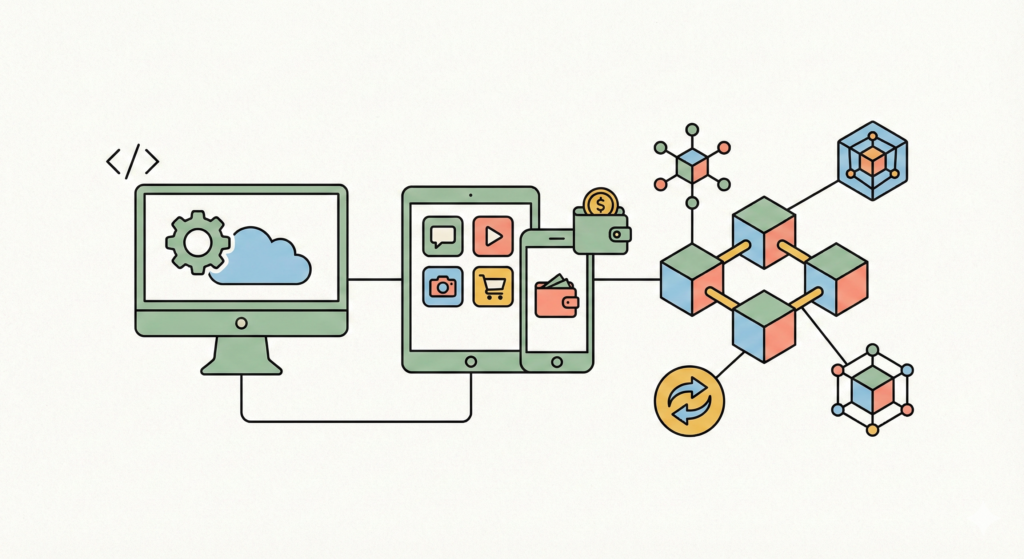
Localizing software, apps, and Web(3) products means navigating complex, dynamic environments where content often appears in multiple contexts. An identical string may require different translations depending on where and how it’s used. Without proper processes, this leads to costly rework. At Semioticom, we design workflows that align with your product development cycles—whether Agile, continuous deployment, or decentralized. While the setup of CI/CD infrastructure remains with your development team, we advise on tool selection, workflow design, and quality control strategies to ensure localization integrates smoothly into your release processes. Our roots in software localization stretch back to the early 1990s, giving us a deep, process-informed perspective that helps prevent typical pitfalls before they occur. The result: localized products that feel native, perform reliably, and scale cleanly as your software grows.
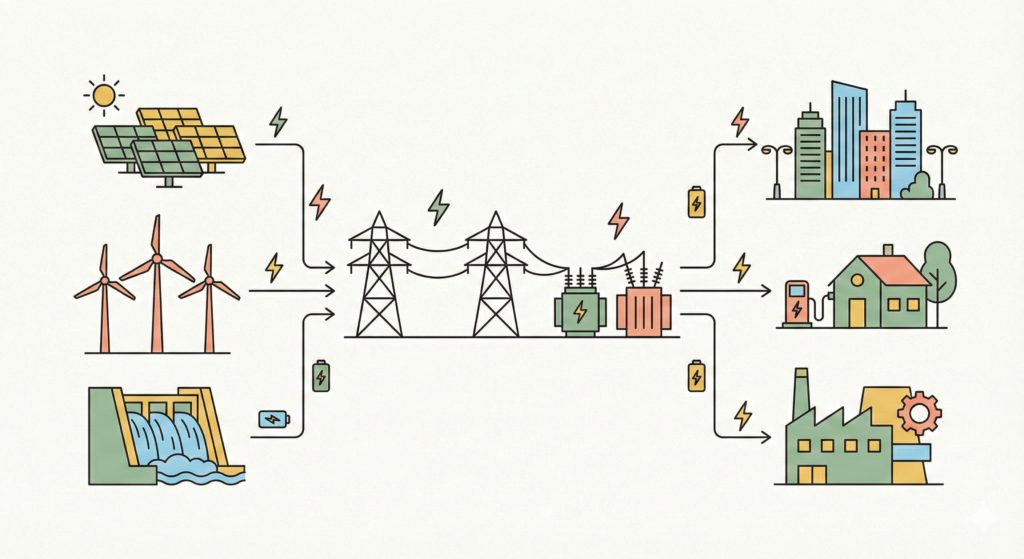
Translating for the energy sector means more than just technical accuracy—it’s about supporting critical infrastructure where safety, compliance, and clarity are non-negotiable. Whether communicating with regulatory bodies, field technicians, or global partners, energy content must meet strict standards while remaining clear and actionable. At Semioticom, we assemble specialized teams with a background in engineering, energy systems, and regulatory environments. We help clients navigate the complex interplay of technical documentation, legal frameworks, and multilingual requirements—ensuring that critical information remains consistent, precise, and aligned with local standards. Our process focuses on balancing cost-efficiency with the need for specialized expertise, helping you prioritize what demands high-level technical attention and where leaner solutions make sense.

Communicating effectively in the fields of climate science, water management, and sustainability requires more than technical correctness—it demands sensitivity to context, policy landscapes, and public perception. Whether addressing policymakers, scientific communities, or the general public, these topics sit at the intersection of data, advocacy, and education, where credibility is hard-won and easily lost. Misused terminology or diluted messaging can lead to confusion, skepticism, or accusations of greenwashing. At Semioticom, we bring together teams with expertise in environmental sciences, policy communication, and technical translation, backed by robust terminology management and consistency frameworks. This ensures your message remains precise, transparent, and trustworthy across languages and audiences. Our approach helps balance scientific accuracy with accessibility—so your content informs, engages, and inspires meaningful action without compromising integrity.
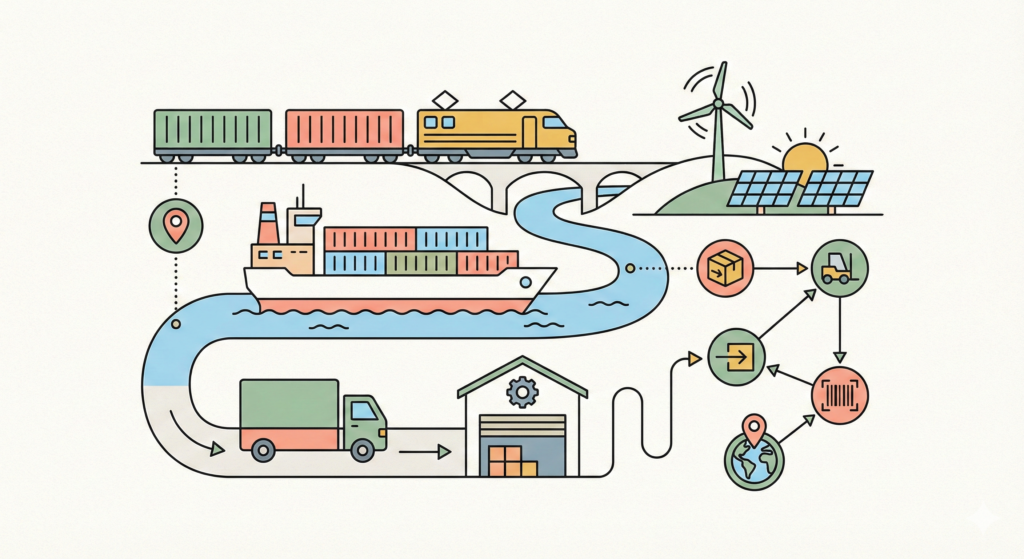
Language plays a critical role in global transportation and supply chain ecosystems—where precision, timing, and compliance are non-negotiable. From customs documentation and safety protocols to real-time logistics systems and partner communications, every term must be accurate, consistent, and context-aware. Today, these demands extend beyond operational coordination to include sustainability claims, traceability documentation, and regulatory reporting—where unclear language can lead to costly errors, non-compliance, or damaged trust. At Semioticom, we assemble linguistically skilled teams with deep knowledge of international logistics, regulatory terminology, and the operational realities of transport networks. We ensure that your content flows clearly across systems and stakeholders—maintaining accuracy from factory floor to freight hub. Our focus on terminology control, document integrity, and seamless stakeholder communication helps reduce error risk, support compliance, and enable effective global operations.

Mobility systems—whether public transport networks, private services, or emerging urban mobility solutions like ride-sharing, micro-mobility, autonomous vehicles, or e-mobility—depend on clear, reliable communication across diverse user groups and operational contexts. From safety instructions and service updates to legal disclaimers and customer engagement, the success of these systems relies on language that is precise, inclusive, and culturally aware. Poorly localized content risks not just misunderstanding, but also public frustration, safety issues, and reputational damage. At Semioticom, we bring together expertise in mobility, infrastructure, and language services to ensure that your communications—from passenger-facing interfaces to regulatory documentation—are clear, compliant, and aligned with local expectations. Our focus on terminology consistency, accessibility, and user-centric messaging supports smoother journeys, better adoption of innovative mobility solutions, and stronger trust between providers and the people they serve.

The translation of highly specialized engineering content such as product manuals, safety guidelines, and technical specifications presents distinct challenges. These materials are more than just texts; they are crucial conveyors of complex engineering concepts, essential for ensuring safety, adherence to international standards, and technical comprehension across various global markets.
Next to assembling a highly specialized team, it is essential to consider regulatory systems that determine the various levels of expertise of installation staff and operating personnel in target markets. To effectively manage budgets in engineering projects, it is further important, to determine the necessary level of expertise. Not all documents produced by an engineering company require translation by highly specialized translators.
At SemiotiCom, we tackle these challenges by assembling teams where not only the linguist but also the management has a background in engineering. This allows us to quickly assess the complexity of the contents at hand and determine the correct approach.

The most challenging aspect of working on content for the hospitality sector is to establish harmony between language that authentically reflects the service providers’ culture while appealing to the needs and preferences of the audience in another country. To effectively handle this challenge, it is important that the linguists working on the text are familiar with the cultural-linguistic characteristics, customer service expectations, and protocols of both the region where the hospitality service is offered and the target market for which the translation is intended. Knowledge of both cultures is essential to ensure the right balance between familiarity and excitement.
At Semioticom, we ensure that all relevant cultural perspectives find their way into the translation by composing diverse and knowledgeable teams of linguists, often with a background in social sciences, geography, and anthropology.

Fine arts and design content lives on nuance. A literal translation can easily flatten an artist’s voice, distort conceptual meaning, or miss the cultural references that make a text resonate. At the same time, these texts often need to be clear and usable: for curators, collectors, visitors, or press. The practical side matters too — typography, layout, captions, and naming conventions (titles, proper nouns, materials, dimensions) need careful handling, especially in catalog and exhibition formats. At Semioticom, we match the right linguists to the creative and cultural context, align early on intent and tone, and coordinate closely with your designers or publishing workflow so the translated result reads naturally and fits the medium.
A legal client, a software company, a hotel group, and an engineering firm do not usually bring the same kind of content, target audience, or consequence of error.
But the sector is only the starting signal. The real production setup depends on what the content does inside that sector: whether it explains, sells, instructs, reports, protects, onboards, complies, or becomes part of the product itself.
That is why we use industries as an orientation layer, not as a fixed service box. They help us understand the environment of the work — but the workflow is defined by the content, the audience, the risk, and the level of specialist judgment required.
A PDF contract may require file preparation, source formatting, layout checks, and careful handling of legal structure. Software localization may require context enrichment, string management, screenshots, character limits, functional testing, debugging, and coordination with product teams. Multimedia work may involve transcription, timing, subtitle constraints, voice-over scripts, or review inside video. E-commerce content may require large-volume handling, product attribute consistency, SEO awareness, and reusable terminology across many similar items.
We serve all languages through a structured vendor management model. The strength of that model is not that every language, domain, and script is covered by one fixed in-house team. It is that we know how to source, assess, brief, and coordinate the right linguists for the specific language setup, content type, and production risk.
Our vendor base works in layers. A wide sourcing pool allows us to access language combinations across markets. A pre-vetted pool gives us faster access to linguists and teams we already know, trust, and can assign with confidence. For more complex projects, we add project- or client-specific vetting: checking subject-matter fit, workflow compatibility, tool experience, file handling, review expectations, and the practical realities of the language pair.
This matters especially for languages that behave differently in production. Right-to-left scripts, non-Latin writing systems, locale variants, rare language pairs, and pivot-based workflows all require more than simply finding a translator. They require a sourcing route and workflow that make sense for the actual conditions of the project.
That is why we treat language coverage as an operational capability. The question is not only whether a language can be found. The question is whether the right linguists, workflow, file handling, review logic, and routing model can be brought together reliably for the work in front of us.

Send us a message and let's discuss all the ways we can support your business
Contact us